Why Women Sleep Worse in Perimenopause (And Why the Standard Advice Isn't Working)
May 22, 2026
If you're in your mid 30s and your sleep has quietly started falling apart, you might assume it's stress, parenting, your screen habits, or just life catching up with you. It might also be the first signs of perimenopause.
This is the bit that doesn't get talked about enough. Perimenopause can begin as early as your mid 30s, and sleep is often the first thing to go. Not hot flushes. Not the obvious stuff. Just an exhausted you, lying awake at 2am, wondering why the things that used to work no longer do.
Here's what's actually happening in your body, why the standard sleep advice isn't fixing it, and what does genuinely help.
The conversation you're hearing everywhere right now
You've probably noticed perimenopause is finally having a moment. Sophie Ellis-Bextor toured Australia and New Zealand earlier this year with an album literally called Perimenopop. The NZ Herald, Stuff and major Australian outlets have increasingly been running stories on perimenopause symptoms, sleep disruption and hormonal health. Friends are starting to compare notes about night sweats and 3am wake-ups in a way they weren't even two years ago.
It's a good shift. Because despite how common this is, the gap in understanding is still enormous. A 2026 international study involving more than 17,000 women across 158 countries found significant disconnects between the symptoms women recognise as perimenopausal and the ones they're actually experiencing. Sleep disruption was among the most common symptoms reported, alongside fatigue, mood changes and anxiety.
Translation: a lot of women are walking around exhausted, blaming themselves, their habits or their stress levels, when the actual cause is hormonal.
What's actually changing in your body
Perimenopause is the transition period before menopause, and it can last anywhere from a few years to a full decade. The average woman in New Zealand and Australia reaches menopause around age 51, which means perimenopause often starts in the early to mid 40s. But it can begin much earlier. Subtle hormonal shifts can show up in your mid 30s, long before your cycle becomes obviously irregular.
Two hormones drive most of the sleep changes:
Progesterone is your body's natural sedative. Research shows it stimulates GABA receptors in the brain, the same calming pathways that prescription sleep medications target. When progesterone is high, your nervous system has a built-in off switch. Progesterone is one of the first hormones to decline in perimenopause, often years before oestrogen does. As it drops, you lose that natural off switch. Falling asleep takes longer. Staying asleep gets harder.
Oestrogen regulates body temperature, influences serotonin (which converts to melatonin), and helps stabilise mood. When oestrogen fluctuates wildly in perimenopause, your body's thermostat becomes unreliable. You overheat in the middle of the night. Your sleep architecture shifts so you spend less time in deep, restorative non-REM sleep. The sleep you do get feels lighter and less refreshing.
This isn't psychological. It's not stress, and it's not in your head. Your brain chemistry is literally changing how it builds sleep.
Why the standard sleep advice isn't enough
Here's the part that frustrates so many women. You've already done the obvious things. You've cut caffeine. You're off your phone by 9pm. You're limiting alcohol. You're trying magnesium. You've tried melatonin. And it's still not working.
The reason is that most general sleep advice assumes your hormones are stable. It treats sleep as a behaviour problem to be solved with better habits. In perimenopause, your hormones are the problem, and no amount of camomile tea is going to replace declining progesterone.
A few specifics on where the standard advice falls short:
Magnesium alone usually isn't enough. Magnesium is genuinely useful. It calms the nervous system, supports muscle relaxation and helps regulate the stress response. The problem is that most magnesium supplements deliver only a small percentage of the recommended daily intake, and they don't address the hormonal piece. You need adequate magnesium, but you need it alongside support for the hormonal shifts driving the insomnia.
Melatonin isn't the answer here (and possibly not where you'd think it is, either). Melatonin is a prescription medicine in New Zealand, with only certain low dose products available through pharmacies for short term use. Beyond that, melatonin works on timing, telling your brain it's night. It doesn't address why you're waking at 3am with a racing heart, which is more about cortisol and progesterone than melatonin levels.
Better sleep hygiene helps, but it has limits. Cool bedrooms, blackout curtains and phone curfews are all genuinely worth doing. They're not what's broken though. Your hormones are. The hygiene supports recovery once the underlying chemistry is supported, not before.
"Just manage your stress" misses the mechanism. Yes, lowering stress helps. But the cortisol pattern that disrupts perimenopause sleep is partly hormonal in origin, not just lifestyle driven. Lower progesterone amplifies the cortisol response. You can be doing all the right stress management work and still wake up at 3am because your body's natural calming hormone is no longer there to balance the stress hormone.
The cortisol and progesterone connection nobody explains
This is the bit that puts the whole picture together. Your cortisol and your progesterone are supposed to work in balance. Cortisol wakes you up in the morning and gradually declines through the day. Progesterone keeps your nervous system calm and helps you stay asleep at night.
In perimenopause, progesterone drops earlier and faster than oestrogen. That means the calming counter to cortisol is weaker. Cortisol stays elevated later into the evening. Or it spikes in the middle of the night and wakes you up wide-eyed at 2 or 3am with no idea why.
If you've ever woken up suddenly with a racing heart, an anxious feeling and a brain that won't switch off (despite being completely exhausted), this is what's happening. It's not anxiety the way you've experienced it before. It's a hormonal cortisol pattern that genuinely changes how your body holds onto sleep.
Once you understand this, the support strategy starts to make a lot more sense. You need to support your hormones during the day, and you need to manage cortisol at night. Both, not either.

What actually helps
The most effective approach to perimenopause sleep is one that supports your hormones across the full day, not just at bedtime. Sleep isn't a switch you flick at 10pm. It's the result of everything your body has been doing for the previous 16 hours.
Here's what makes the biggest difference for most women.
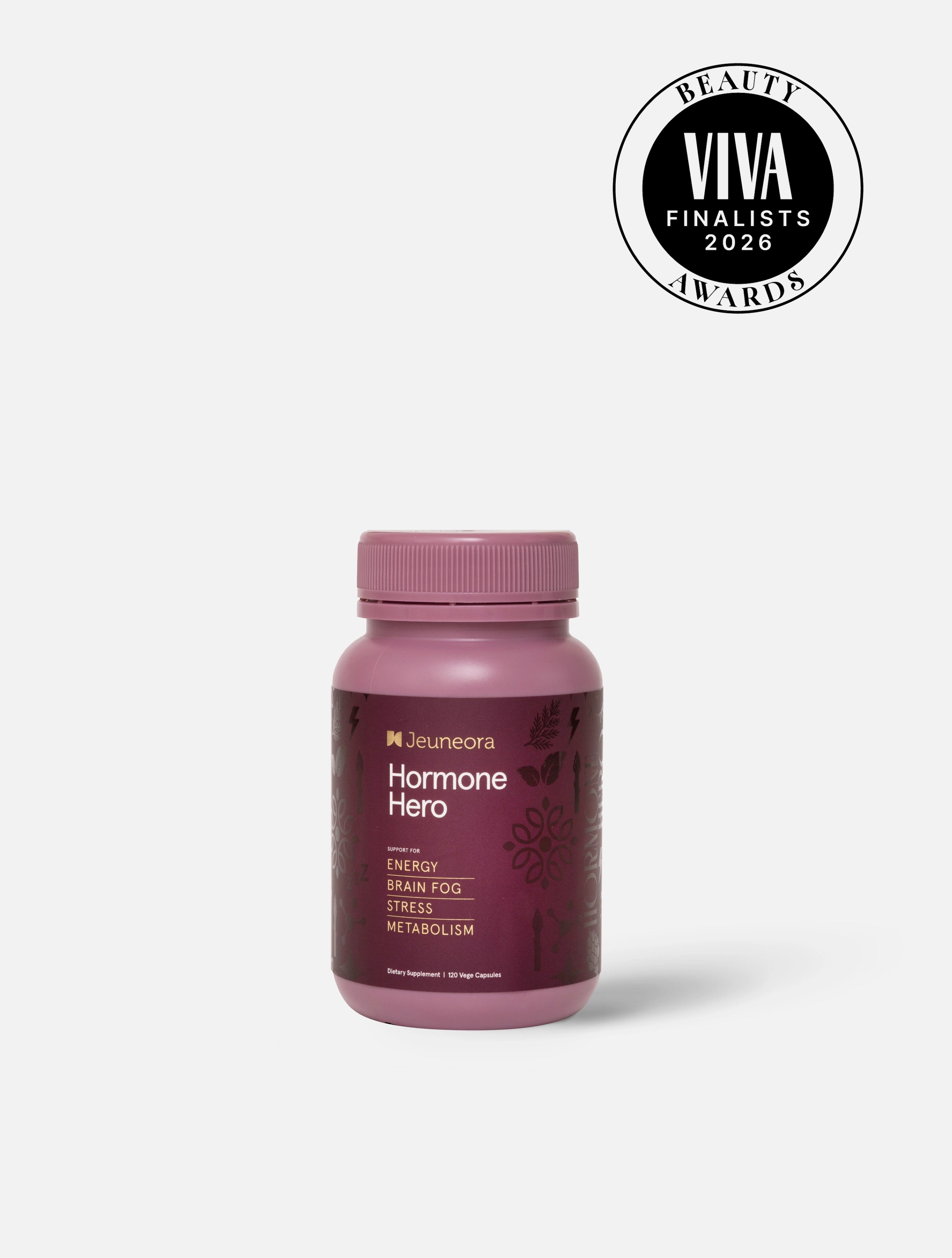
Support your hormones in the morning. This is the piece most women miss. Hormone Hero was developed by our founder Monique from her own experience navigating perimenopause, and it's formulated to address exactly this. It delivers 320mg of magnesium bisglycinate per serve, which is the full New Zealand recommended daily intake for women. That alone is more magnesium than most general supplements provide. Alongside it, the formula includes chaste berry and shatavari to support hormonal balance, Fermodiola® for stress resilience and Bluenesse® for mood and calm. Taken in the morning, it gives your body the building blocks it needs to support hormonal balance through the day, which directly affects how well you sleep at night.
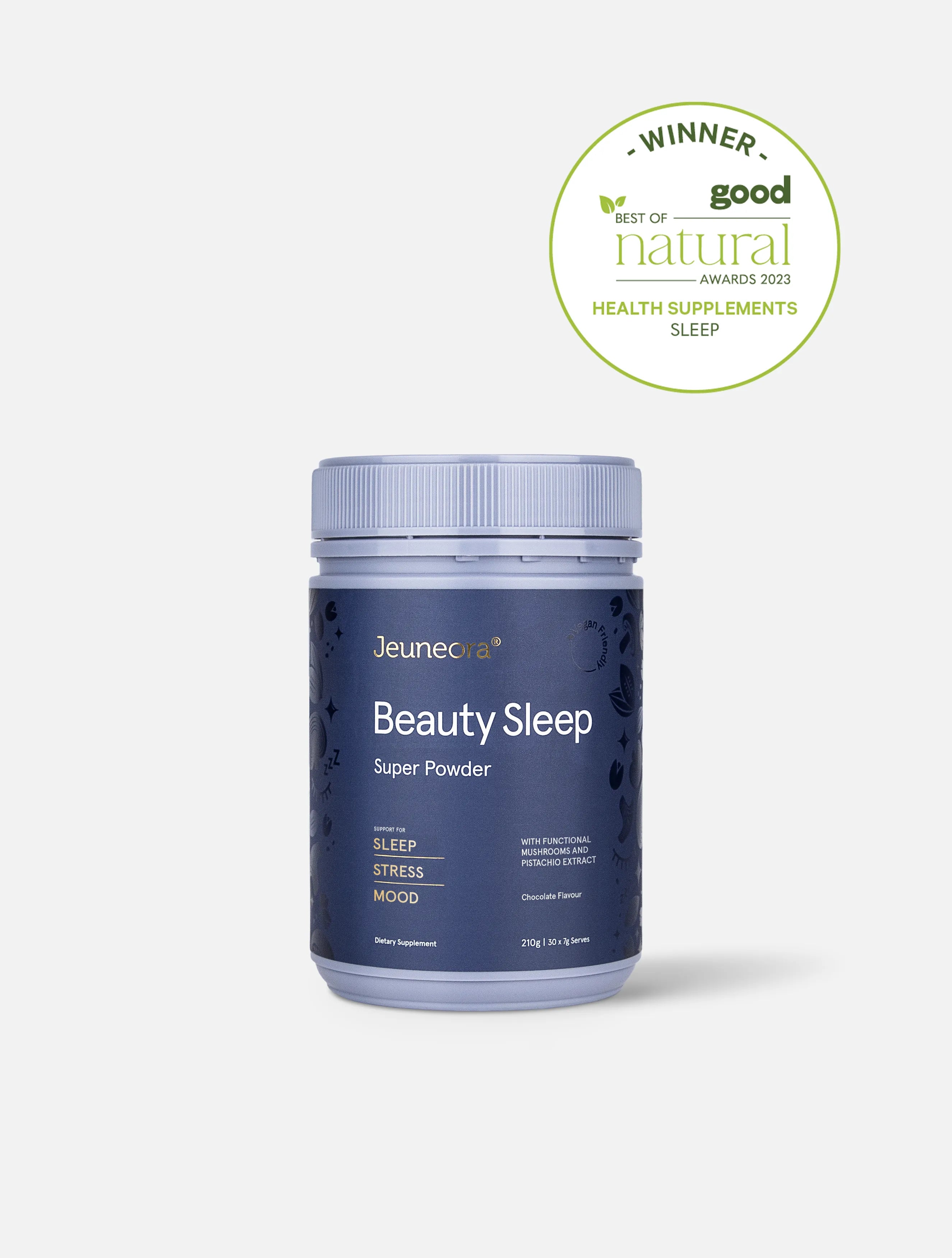
Address cortisol at night. This is where Beauty Sleep comes in. Most sleep supplements either lean on melatonin (tightly restricted in New Zealand) or just stack more magnesium. Beauty Sleep is built around a different approach. It uses pistachio extract alongside a blend of adaptogenic mushrooms (reishi, shiitake and maitake). Reishi has been studied for its ability to support healthy cortisol balance and increase non-REM sleep over time. It works with your body's stress response rather than overriding it, which is why it tends to work for women who've tried everything else.
Taken about 30 minutes before bed as a warm drink, Beauty Sleep also doubles as a wind-down ritual. The act of making something warm, sitting with it, and giving yourself five minutes away from screens is part of what signals to your nervous system that the day is done.
Hormone Hero in the morning and Beauty Sleep at night combination is genuinely what shifts sleep patterns long term in perimenopause. Hormones supported across the full day, cortisol managed at night.
Add evening collagen. Sleep is when your body does its deepest repair work. Skin renewal, collagen synthesis, tissue recovery. Adding Naked Collagen to your evening Beauty Sleep gives your body the amino acids it needs at the exact time it's most active in repair mode. It's pure marine collagen with no added ingredients, so it stirs into a hot drink without changing the taste or texture. One cup, two jobs done. For more on why evening collagen works, read our guide to taking collagen at night.
Keep your bedroom cool. Oestrogen fluctuations affect your body's thermostat, which means you overheat more easily in perimenopause. Aim for around 18 degrees, breathable cotton or linen bedding, and a fan if you need one. This matters more in older Kiwi and Australian homes where heat pumps and log burners can leave bedrooms warmer than they should be at night.
Get your magnesium right. If you're not taking Hormone Hero, prioritise a magnesium supplement that delivers the full RDI in a well absorbed form (magnesium bisglycinate is ideal). Most women in New Zealand and Australia don't get enough magnesium through diet alone, and the deficiency is amplified during perimenopause when your body's demand goes up.
Cut caffeine earlier than you used to. Caffeine has a half-life of 5 to 6 hours, and for slow metabolisers it lingers even longer. Hormonal shifts in perimenopause often change how you process caffeine. The 3pm coffee that used to be fine might now be enough to disrupt your 11pm sleep. If your sleep has changed, try cutting caffeine off at midday for a few weeks and see what happens.
When to see your GP
Most perimenopause sleep issues respond well to nutritional and lifestyle support. But some patterns are worth getting checked. If your sleep is significantly disrupted and you're also experiencing very heavy or irregular periods, hot flushes that feel overwhelming, or low mood that's affecting your day to day functioning, talk to your GP.
Hormone replacement therapy (HRT) is an option some women find genuinely helpful, particularly when symptoms are severe. It's not for everyone, and there are alternatives to discuss. Either way, an informed conversation with a GP who's up to date on perimenopause care is worth having.
Other things worth ruling out: thyroid issues, iron deficiency, sleep apnoea and anxiety or depression can all present as insomnia and can be made worse by perimenopause. Simple blood work and a sleep review can usually tell you what's going on.

A simple daily routine that works
You don't need to overhaul your life. A few small, consistent changes layered on top of each other make the biggest difference.
Morning: Take Hormone Hero with food in the morning. The magnesium and hormonal botanicals work across the full day to support balance going into the evening.
Throughout the day: Cut caffeine by midday. Move your body if you can, even just a 20 minute walk. Get outside for at least a few minutes of natural light, which helps regulate your body's circadian rhythm.
Evening: Wind down with Beauty Sleep about 30 minutes before bed. Stir in a teaspoon of Naked Collagen to support overnight repair. Dim the lights, cool the bedroom and aim to be in bed at a consistent time.
If you want to go deeper on the wider sleep picture beyond perimenopause specifically, our guide to why you can't fall asleep covers seven of the most common reasons sleep struggles happen at any age. If the sleepmaxxing trend has crossed your feed, our honest look at whether sleepmaxxing is worth it sorts the science from the content. If worsening PMS is part of your picture too, our guide to why your PMS might be getting worse explains how it overlaps with early perimenopause. And if you want to understand more about how collagen supports your body during the hormonal shifts of perimenopause and menopause, read our guide to collagen for menopause.
The bottom line
If your sleep has fallen apart and you're somewhere between your mid 30s and early 50s, you're not broken. You're not doing it wrong. Your hormones are shifting, and the standard sleep advice doesn't address what's actually going on.
The most effective thing you can do is support your hormones across the full day, not just at bedtime. Magnesium and hormonal botanicals in the morning. Cortisol support at night. Add evening collagen if you want to make the most of the repair work your body is already doing while you sleep.
Small things, layered consistently. That's what genuinely shifts perimenopause sleep.
Ready to start? Explore the Jeuneora Wellness Supplements and find what your body has been asking for.